
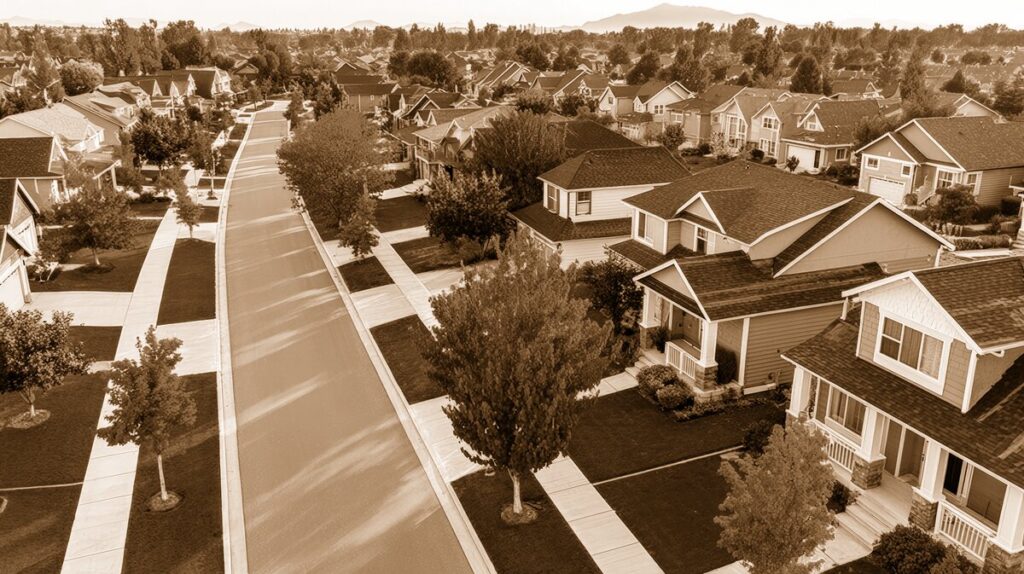
Hidden Creek may not be the first name that comes to mind when people think of Oklahoma City neighborhoods, but for those who’ve strolled its leafy lanes or picnicked beside its winding streams, it’s a place that lingers in memory. The story of Hidden Creek is as unique as the neighborhood itself—a blend of quiet charm, resilient spirit, and an enduring sense of community that spans generations. As a longtime local, I’m delighted to share what makes this neighborhood so special.
Origins and Early Days
The origins of Hidden Creek trace back to the post-World War II era—an age when Oklahoma City was spreading outward, and returning veterans wished for homes with space to grow. Developers were drawn to the rolling, wooded land just southeast of what’s now SE 44th Street and Sunnylane Road. The area was dominated by natural springs and a small, meandering creek that ran parallel to SE 48th Street. Early plats from the late 1940s show how the creek’s path dictated the neighborhood’s winding streets and generous green spaces.
The name “Hidden Creek” itself is a literal nod to these origins. Locals say the name was inspired by the stream that, while never grand, gave life to the land and offered a picturesque nook slightly apart from the city’s bustle. For decades, Hidden Creek lived up to its name—a suburban hideaway, unknown to many but deeply loved by those who called it home.
Key Historical Milestones
- 1950: First Homes and the Birth of a Community
The first homes sprang up on South Parker Avenue and SE 47th Street, featuring broad lawns and open floor plans. The Hidden Creek Civic Association was established to welcome newcomers and, in those early years, even helped dig ditches and plant trees along what would soon become iconic streets.
- 1965: Hidden Creek Park Established
Residents lobbied the city to preserve a swath of land along the creek. Their efforts resulted in Hidden Creek Park, which today remains the heart of neighborhood activity. Local lore has it that early playground equipment was donated by a neighboring church, and summer movie nights became a beloved tradition.
- 1972: Arrival of Hidden Creek Elementary
To meet the needs of the growing number of families, Hidden Creek Elementary School opened its doors on SE 48th Terrace. Generations have since crossed its threshold. Its most distinctive feature—a mural showcasing scenes of Oklahoma prairie—was completed by former students in the 1980s and is still visible today.
- 1985: Storms and Resilience
The severe storms of 1985 damaged many homes along South Winston Way, but the community rallied. Potluck dinners and fundraising events were held in church halls and the park’s pavilion, helping neighbors rebuild. This spirit of mutual support is a cornerstone of Hidden Creek’s identity.
Notable Landmarks and Buildings
While Hidden Creek favors understated elegance over ostentation, several landmarks stand out:
- The Old Stone Bridge on Hidden Creek Trail
Built in the 1950s from local sandstone, this small, arched bridge is the subject of countless family snapshots. Each spring, wildflowers bloom along its edges, making it a favorite for evening strolls.
- Hidden Creek Park Pavilion
The modest wooden pavilion, constructed in 1967, is the gathering point for picnics, holiday festivals, and annual “Creek Fest” celebrations. Generations have celebrated birthdays and anniversaries under its roof.
- First Fellowship Church on SE 46th Street
Still ringing its humble bell every Sunday, the church is not just a place of worship but a community anchor—hosting events, blood drives, and youth sports leagues.
Streets and Spaces That Tell a Story
Each winding street bears witness to Hidden Creek’s growth and evolution. South Lawndale Avenue, with its canopy of mature oaks, still boasts several of the original 1950s ranch homes, lovingly maintained or thoughtfully updated. Meanwhile, SE 49th Court is known for its annual Halloween parade—a recent tradition started by younger families that now draws visitors from nearby neighborhoods.
The neighborhood’s sprawling greenbelt, an informal preserve along the creek that winds behind SE 47th Place, remains rich with wildlife—from migratory birds to the occasional shy deer. Residents often say this slice of nature, just minutes from I-240, is Hidden Creek’s best-kept secret.
Evolution Over the Decades
- 1970s-1980s:
As Oklahoma City grew, some predicted Hidden Creek would lose its character. Yet, even as traffic increased along Sunnylane Road, the neighborhood retained its laid-back pace. Homes changed hands, but newcomers were encouraged to join long-standing traditions like the spring cleanup and July picnic in the park.
- 1990s-2000s:
As new families moved in, Hidden Creek saw waves of renovation. Many original homes were remodeled, but the community’s core values—friendliness, safety, and quiet pride—remained. The Civic Association expanded its reach, installing new playground equipment in 2001 and launching a neighborhood watch program to keep streets safe.
- Present Day:
Today, Hidden Creek finds itself at a happy crossroads of old and new. The area is attracting professionals eager for green space and good schools, while longtime residents ensure that the legacy of block parties, holiday caroling, and helping hands lives on.
What Makes Hidden Creek Special
Perhaps it’s the blend of old shade trees and the laughter of children riding bikes along SE 48th Terrace. Or the way Hidden Creek Park fills with neighbors sharing stories beneath a fiery Oklahoma sunset. There’s a palpable sense of belonging here—a living history written not just in stone and brick, but in the bonds between people.
Ask any resident, and they’ll likely share their favorite memory—fog rising off the creek on a chilly morning, the glow of luminarias on Christmas Eve, or the distant sound of the church bell calling one and all. Hidden Creek isn’t just a place on the map—it’s a feeling, a community, and a legacy that continues to grow.
Whether you’re a visitor, a new arrival, or a lifelong resident, Hidden Creek welcomes you with open arms and the promise of more stories to come.